Welcome to Venice, with its network of canals, rich history and composition of over 100 small islands in the Adriatic Sea. Fine art, stunning architecture, white limestone bridges, moving about via watercraft... Venice is a singular experience and an astonishing masterpiece of civilization.
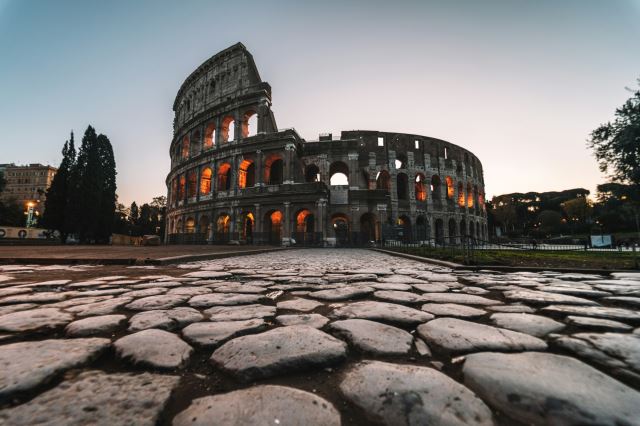
Often called the Eternal City, Rome stands alone as Italy's most visited destination. The third most populated city in the European Union, Rome boasts ancient sites, yet has a modern flair — an exhilarating mix of the Old World and the new.
Florence (Firenze) is a compact city, but densely packed with spectacular art and architecture everywhere you look. The city center itself is a UNESCO World Heritage Site.
This pleasant port town provides a nice, calmer contrast to bustling Rome, so travelers are advised to not simply pass through, but linger and discover more of Civitavecchia. Explore Forte Michelangelo, shop at Corso Centocelle, see the neoclassical Trajan Theatre, and delve into the therapeutic Taurine Baths of Civitavecchia.
Situated between magnificent Mount Vesuvius and the glittering Tyrrhenian Sea, Naples is the perfect destination for history and archaeology aficionados and lovers of savory Italian eats. Marvel at the ruins of Pompeii and Herculaneum, explore the San Gennaro Catacombs, and end your day with authentic Neapolitan pizza.
Tuscany, Italy, is a region where the essence of Italy's beauty, history, and culture is captured in its rolling hills, timeless villages, and world-class art. Famous for its postcard-perfect landscapes, Tuscany is where cypress-lined roads lead to centuries-old hilltop towns like Montepulciano and Montalcino, which are steeped in history and offer some of Italy's finest wines, including the renowned Brunello di Montalcino. Tuscany is a treasure trove for lovers of art and architecture, boasting
Messina sits on the northeastern tip of Sicily, facing the narrow Strait of Messina. Its position has long made it a key port connecting the island to mainland Italy. The city is shaped by its harbor, hillside neighborhoods, and views across the water toward Calabria. Messina stands out for its role as a gateway, with active ferry routes and a layout that blends rebuilt urban areas with historic landmarks and coastal scenery.
Bari, the capital of Puglia in southern Italy, is a vibrant port city with a rich history and lively atmosphere. Begin your exploration at the Basilica di San Nicola, an iconic pilgrimage site housing the relics of Saint Nicholas. This Romanesque church, dating back to the 11th century, is renowned for its stunning architecture and historical significance (Basilica di San Nicola).
Nestled along the cliffs of the Gulf of Naples, Sorrento will charm you with its picturesque scenery and breathtaking coastal views. Three hours south of metropolitan Rome, Sorrento provides easy access to many of Italy’s most beloved destinations, including Naples, Pompeii, Amalfi, and Capri.
Located along the coast of Southern Italy, Crotone emanates a classic Italian lifestyle that appeals to tourists both foreign and domestic.
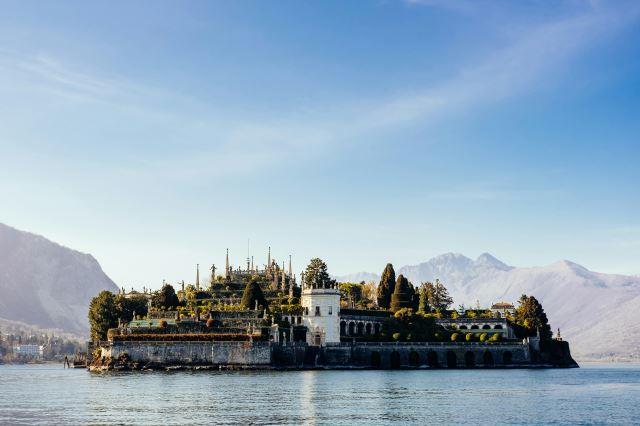
Lake Maggiore, straddling the border of northern Italy and southern Switzerland, is the second-largest lake in Italy and one of the most scenically diverse. Surrounded by Alpine peaks and dotted with elegant towns, the lake has attracted visitors for centuries, including literary figures like Stendhal and Ernest Hemingway. The western shore is home to the Borromean Islands, a group of three small islands known for palaces, terraced gardens, and white peacocks that roam freely across the lawns.
Palermo, the vibrant capital of Sicily, Italy, is a city where history, culture, and gastronomy converge in a kaleidoscope of experiences. A walk through Palermo is like stepping into a living museum, where Byzantine, Arab, Norman, and Baroque influences blend seamlessly. The Palermo Cathedral, a masterpiece of architectural evolution, showcases a mix of styles from its Norman origins to later Baroque and Neoclassical elements.